Green Journey Adventure

Green Journey Adventure

PROJECT

Self-directed project

KEY CONTRIBUTIONS

Product Thinking

Game Design

Prototype

Coding

Electronics

TOOL

Figma

Adobe Aero

Adobe CC Suite

Overview

Problem

Traditional environmental education fails to connect the dots for young learners. Children struggle to see how their actions affect environmental, social, and economic systems. Without holistic perspective or tangible feedback on their choices' impacts, they can't grasp sustainability's long-term effects. This fragmented approach results in poor retention and decreased motivation to engage with environmental challenges.
64% to 55% ↓

64% to 55% ↓

represents the decline in environment sensitivity and behaviour engagement between ages 7-18

43%

43%

was the average score students achieved on cognitive skills in the NOAA National Environmental Literacy Assessment

Overview

Project Vision

  • Transform environmental education through tangible, gamified experiences

  • Enable learning through play with hands-on interactive gameplay

  • Reveal interconnected impacts by showing how choices affect systems

  • Convert abstract concepts into concrete understanding and lasting memories for everyday application

Core Features

Multi-Theme Challenges

Multi-Theme Challenges

Five environmental topics — recycling, energy, water, and biodiversity, each with unique puzzle mechanics tailored to specific sustainability lessons.

Reversible Learning

Reversible Learning

Players can rearrange puzzle pieces to explore different solutions through undo-redo interactions. This creates a safe learning environment where they can experiment freely and learn through trial and error.

Cause-Effect Learning

Cause-Effect Learning

The completed poster unlocks AR experiences that reveal environmental impacts, demonstrating how individual actions cascade through interconnected ecological, social, and economic systems.

Immediate Feedback

Immediate Feedback

Satisfying piece connections and visual completion cues guide assembly, while AR rewards celebrate success, allowing children to self-correct and discover solutions independently.

Multi-Theme Challenges

Five environmental topics — recycling, energy, water, and biodiversity, each with unique puzzle mechanics tailored to specific sustainability lessons.

Reversible Learning

Players can rearrange puzzle pieces to explore different solutions through undo-redo interactions. This creates a safe learning environment where they can experiment freely and learn through trial and error.

Cause-Effect Learning

The completed poster unlocks AR experiences that reveal environmental impacts, demonstrating how individual actions cascade through interconnected ecological, social, and economic systems.

Immediate Feedback

Satisfying piece connections and visual completion cues guide assembly, while AR rewards celebrate success, allowing children to self-correct and discover solutions independently.

Multi-Theme Challenges

Five environmental topics — recycling, energy, water, and biodiversity, each with unique puzzle mechanics tailored to specific sustainability lessons.

Reversible Learning

Players can rearrange puzzle pieces to explore different solutions through undo-redo interactions. This creates a safe learning environment where they can experiment freely and learn through trial and error.

Immediate Feedback

Satisfying piece connections and visual completion cues guide assembly, while AR rewards celebrate success, allowing children to self-correct and discover solutions independently.

Cause-Effect Learning

The completed poster unlocks AR experiences that reveal environmental impacts, demonstrating how individual actions cascade through interconnected ecological, social, and economic systems.

Research

Secondary Research

How do children process newly acquired knowledge into memory?

How do children integrate new knowledge into memory?

We began with secondary research to understand how children aged 7-10 acquire and retain knowledge

1. Working Memory (Initial Capture)

New information enters working memory, where children can hold it temporarily—but only for seconds without active engagement.

2. Encoding (Making It Stick)

Information moves to long-term storage when children actively process it through: Connecting to existing knowledge, Creating meaningful associations, and Hands-on manipulation

3. Consolidation (Building Lasting Memory)

Repetition and practice strengthen memory traces. Physical interaction enhances consolidation, and distributed practice (spacing over time) outperforms massed practice.

Research

Qualitative Interviews

We spoke with parents and teachers of children aged 7-10 to understand how children in this age group learn effectively and retain information.

"My child retains information better when it's part of a story or when she's actively doing something, not just reading about it. Facts alone are forgotten after a week, but when she's involved, she'll talk about it for months."

"My child retains information better when it's part of a story or when she's actively doing something, not just reading about it. Facts alone are forgotten after a week, but when she's involved, she'll talk about it for months."

— Parents of children aged 12 and 8

"Children need to see real-world relevance in their learning. Involving them in practical projects makes information 'stick' better than conventional lessons that are quickly forgotten."

"Children need to see real-world relevance in their learning. Involving them in practical projects makes information 'stick' better than conventional lessons that are quickly forgotten."

— Early childhood educator at Käferland Kindergarten

— Early childhood educator at Käferland Kindergarten

"My daughter couldn't memorize multiplication tables until we tried 'math walks' . Adding movement made the numbers stick, and now she recalls them instantly."

"My daughter couldn't memorize multiplication tables until we tried 'math walks' . Adding movement made the numbers stick, and now she recalls them instantly."

— Parents of children aged 10

Research

Secondary Research

How do children integrate new knowledge into memory?

We began with secondary research to understand how children aged 7-10 acquire and retain knowledge

1. Working Memory (Initial Capture)

New information enters working memory, where children can hold it temporarily—but only for seconds without active engagement.

2. Encoding (Making It Stick)

Information moves to long-term storage when children actively process it through: Connecting to existing knowledge, Creating meaningful associations, and Hands-on manipulation

3. Consolidation (Building Lasting Memory)

Repetition and practice strengthen memory traces. Physical interaction enhances consolidation, and distributed practice (spacing over time) outperforms massed practice.

Research

Qualitative Interviews

We spoke with parents and teachers of children aged 7-10 to understand how children in this age group learn effectively and retain information.

"My child retains information better when it's part of a story or when she's actively doing something, not just reading about it. Facts alone are forgotten after a week, but when she's involved, she'll talk about it for months."

— Parents of children aged 12 and 8

"Children need to see real-world relevance in their learning. Involving them in practical projects makes information 'stick' better than conventional lessons that are quickly forgotten."

— Early childhood educator at Käferland Kindergarten

"My daughter couldn't memorize multiplication tables until we tried 'math walks' . Adding movement made the numbers stick, and now she recalls them instantly."

— Parents of children aged 10

How might we help 7-10 year olds understand environmental impacts of their choices to build lasting sustainability habits?

need

user

reason

How might we help 7-10 year olds understand environmental impacts of their choices to build lasting sustainability habits?

Developing a Solution

From Research to Framework: Applying Gamification Principles

After analyzing how children learn through play, I systematically translated these insights into design decisions. I identified a gap between knowing what works and understanding why these approaches drive engagement.

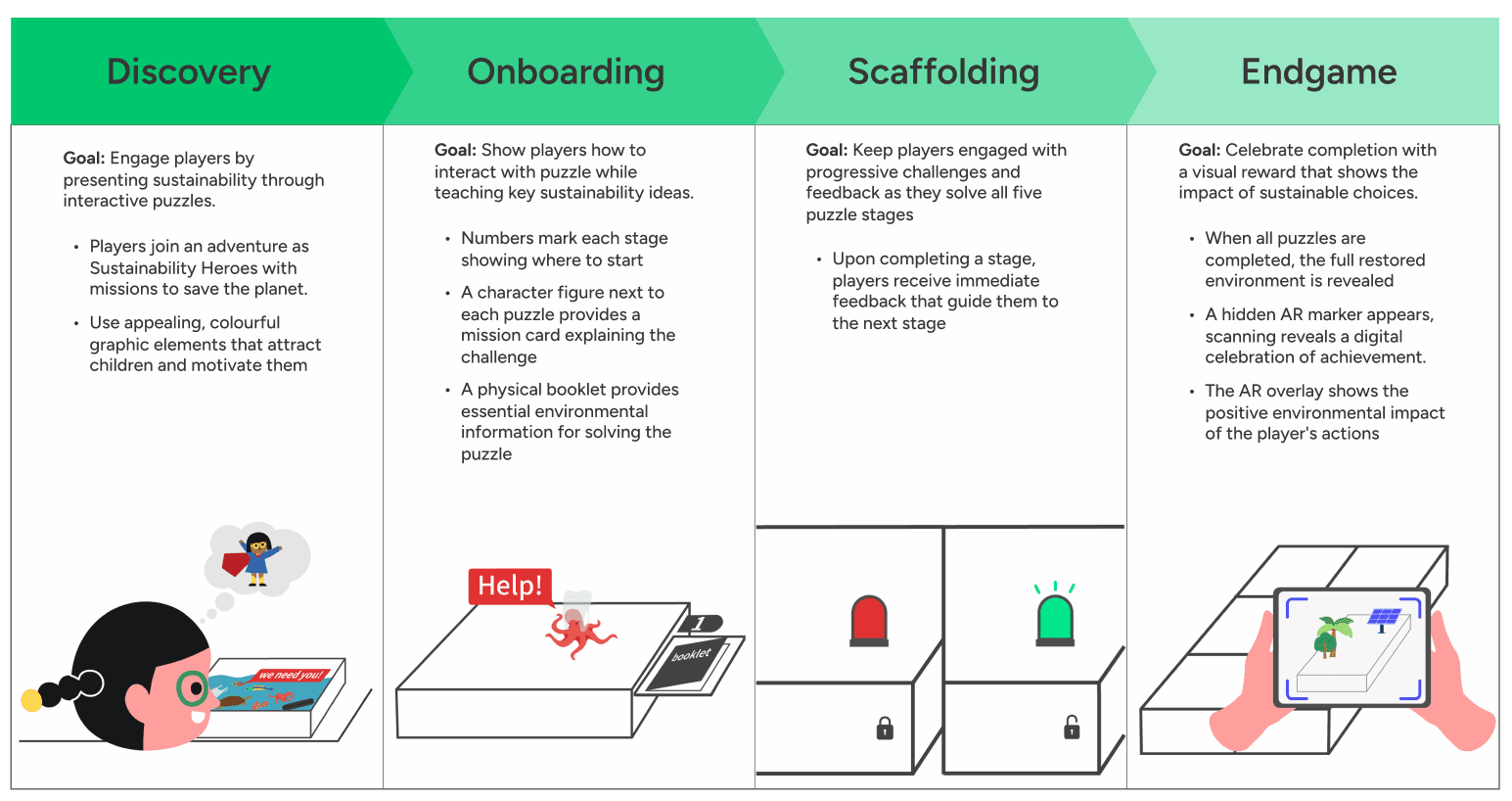
I applied Yu-kai Chou's Octalysis Framework mapped against the 4 Phases of a Player's Journey to analyze which motivational drivers would best support learning about environmental topics.

My Octalysis Framework

Meaning

Introduce players to the game background: Let them feel like heroes saving the world through sustainable actions that help their community in the puzzle.

Game Mechanic: Children play as characters solving local environmental challenges, collecting sustainable practice clues to solve each case.

Game Element: Player as Main Character, other supporting characters stand next to each puzzle, seeking help.

Accomplishment

Players feel accomplished through clear feedback and progression cues that guide them to the next challenge.

Game Mechanic: Solved puzzles trigger immediate feedback (visual, lights, sounds, vibrations) that unlocks the next challenge.

Game Element: Tangible game elements, Virtual game element as feedback

Ownership

Physical ownership: Children physically manipulate and assemble puzzle pieces, creating a sense of control over the environment they're rebuilding.

Story ownership: Players become the protagonist environmental hero - this is "their" adventure and "their" positive impact

Game Element: Physical puzzle pieces they control and place & Their role as the environmental hero of the story.

Unpredictability

Endgame Impact Visualization. Physical and visual (AR) transformations to show successful puzzle completion

Game Mechanic: Tangible puzzle pieces that interact with virtual AR overlays.

Feedback Mechanism: After a puzzle is solved, the AR overlay could transform the physical game board into an improved environment as a visual reward.

How It Resonates: This feedback reinforces the positive impact of the player’s actions, making the result of their effort memorable.

My Octalysis Framework

Meaning

Introduce players to the game background: Let them feel like heroes saving the world through sustainable actions that help their community in the puzzle.

Game Mechanic: Children play as characters solving local environmental challenges, collecting sustainable practice clues to solve each case.

Game Element: Player as Main Character, other supporting characters stand next to each puzzle, seeking help.

Accomplishment

Players feel accomplished through clear feedback and progression cues that guide them to the next challenge.

Game Mechanic: Solved puzzles trigger immediate feedback (visual, lights, sounds, vibrations) that unlocks the next challenge.

Game Element: Tangible game elements, Virtual game element as feedback

Ownership

Physical ownership: Children physically manipulate and assemble puzzle pieces, creating a sense of control over the environment they're rebuilding.

Story ownership: After a puzzle is solved, the AR overlay could transform the physical game board into an improved environment as a visual reward.

Game Element: Physical puzzle pieces they control and place & Their role as the environmental hero of the story.

Unpredictability

Endgame Impact Visualization. Physical and visual (AR) transformations to show successful puzzle completion

Game Mechanic: Tangible puzzle pieces that interact with virtual AR overlays.

Feedback Mechanism: After a puzzle is solved, the AR overlay could transform the physical game board into an improved environment as a visual reward.

How It Resonates: This feedback reinforces the positive impact of the player’s actions, making the result of their effort memorable.

My Octalysis Framework

Meaning

Introduce players to the game background: Let them feel like heroes saving the world through sustainable actions that help their community in the puzzle.

Game Mechanic: Children play as characters solving local environmental challenges, collecting sustainable practice clues to solve each case.

Game Element: Player as Main Character, other supporting characters stand next to each puzzle, seeking help.

Accomplishment

Players feel accomplished through clear feedback and progression cues that guide them to the next challenge.

Game Mechanic: Solved puzzles trigger immediate feedback (visual, lights, sounds, vibrations) that unlocks the next challenge.

Game Element: Tangible game elements, Virtual game element as feedback

Ownership

Physical ownership: Children physically manipulate and assemble puzzle pieces, creating a sense of control over the environment they're rebuilding.

Story ownership: After a puzzle is solved, the AR overlay could transform the physical game board into an improved environment as a visual reward.

Game Element: Physical puzzle pieces they control and place & Their role as the environmental hero of the story.

Unpredictability

Endgame Impact Visualization. Physical and visual (AR) transformations to show successful puzzle completion

Game Mechanic: Tangible puzzle pieces that interact with virtual AR overlays.

Feedback Mechanism: After a puzzle is solved, the AR overlay could transform the physical game board into an improved environment as a visual reward.

How It Resonates: This feedback reinforces the positive impact of the player’s actions, making the result of their effort memorable.

Meaning

Introduce players to the game background: Let them feel like heroes saving the world through sustainable actions that help their community in the puzzle.

Game Mechanic: Children play as characters solving local environmental challenges, collecting sustainable practice clues to solve each case.

Game Element: Player as Main Character, other supporting characters stand next to each puzzle, seeking help.

Accomplishment

Players feel accomplished through clear feedback and progression cues that guide them to the next challenge.

Game Mechanic: Solved puzzles trigger immediate feedback (visual, lights, sounds, vibrations) that unlocks the next challenge.

Game Element: Tangible game elements, Virtual game element as feedback

Ownership

Physical ownership: Children physically manipulate and assemble puzzle pieces, creating a sense of control over the environment they're rebuilding.

Story ownership: After a puzzle is solved, the AR overlay could transform the physical game board into an improved environment as a visual reward.

Game Element: Physical puzzle pieces they control and place & Their role as the environmental hero of the story.

Unpredictability

Endgame Impact Visualization. Physical and visual (AR) transformations to show successful puzzle completion

Game Mechanic: Tangible puzzle pieces that interact with virtual AR overlays.

Feedback Mechanism: After a puzzle is solved, the AR overlay could transform the physical game board into an improved environment as a visual reward.

How It Resonates: This feedback reinforces the positive impact of the player’s actions, making the result of their effort memorable.

Player’s Journey

Iteration

Design Decision: Choice of Sustainability Theme

Using Octalysis insights, I explored 5 sustainability themes and designed gamification mechanics with physical interactions that make environmental impacts tangible for children to see, touch, and understand.
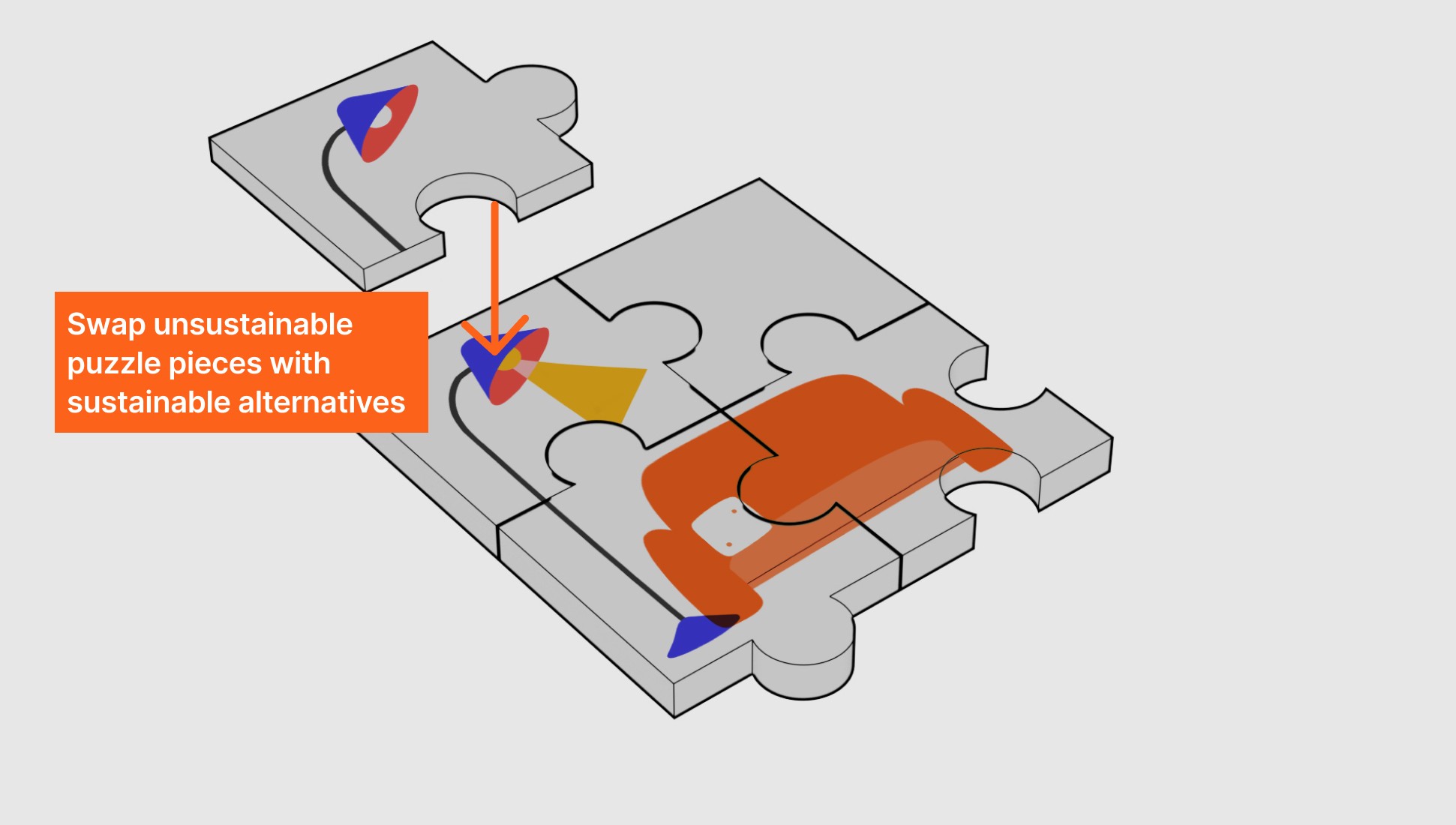
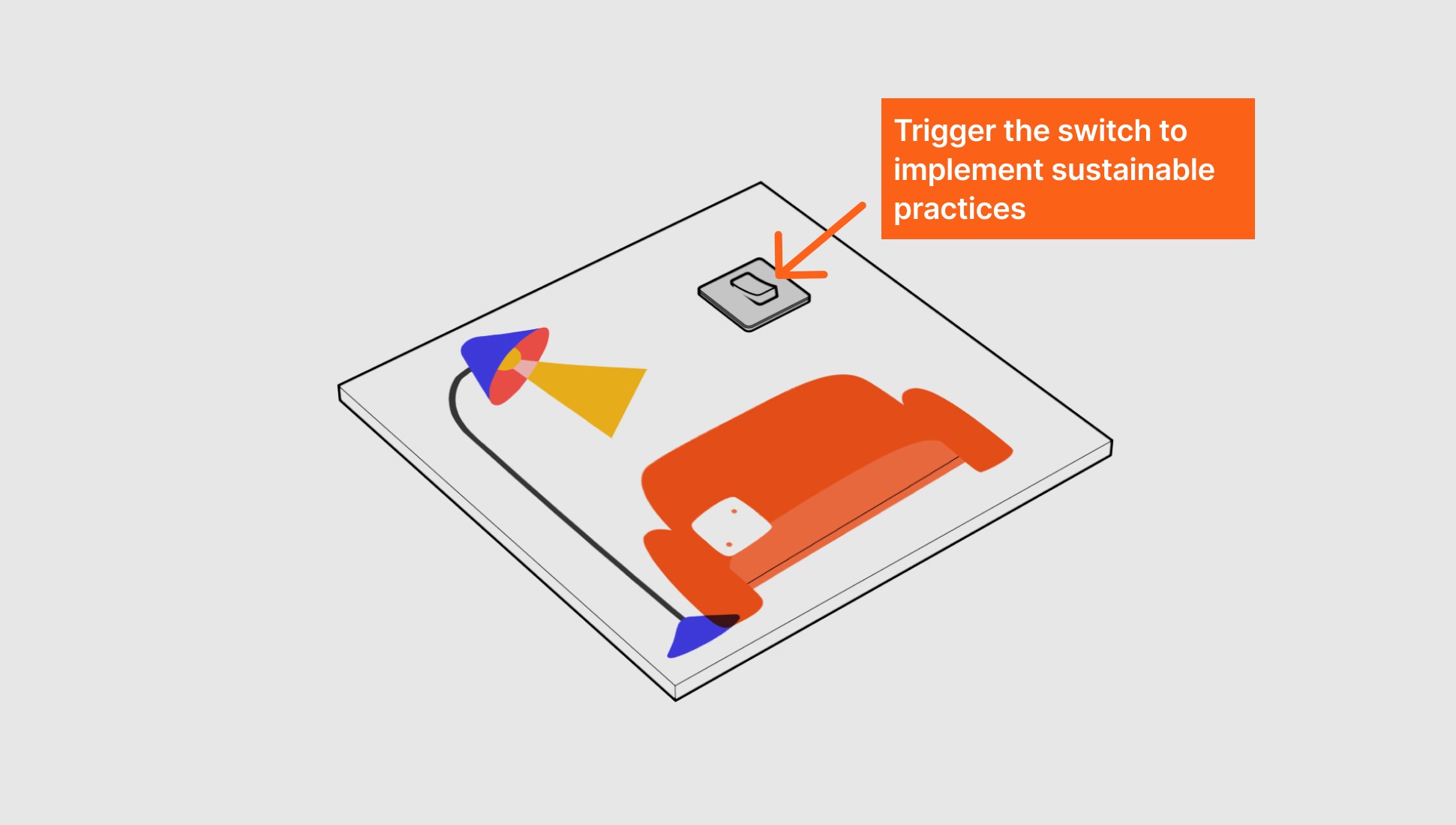
Activity 1: Energy & Water Conservation

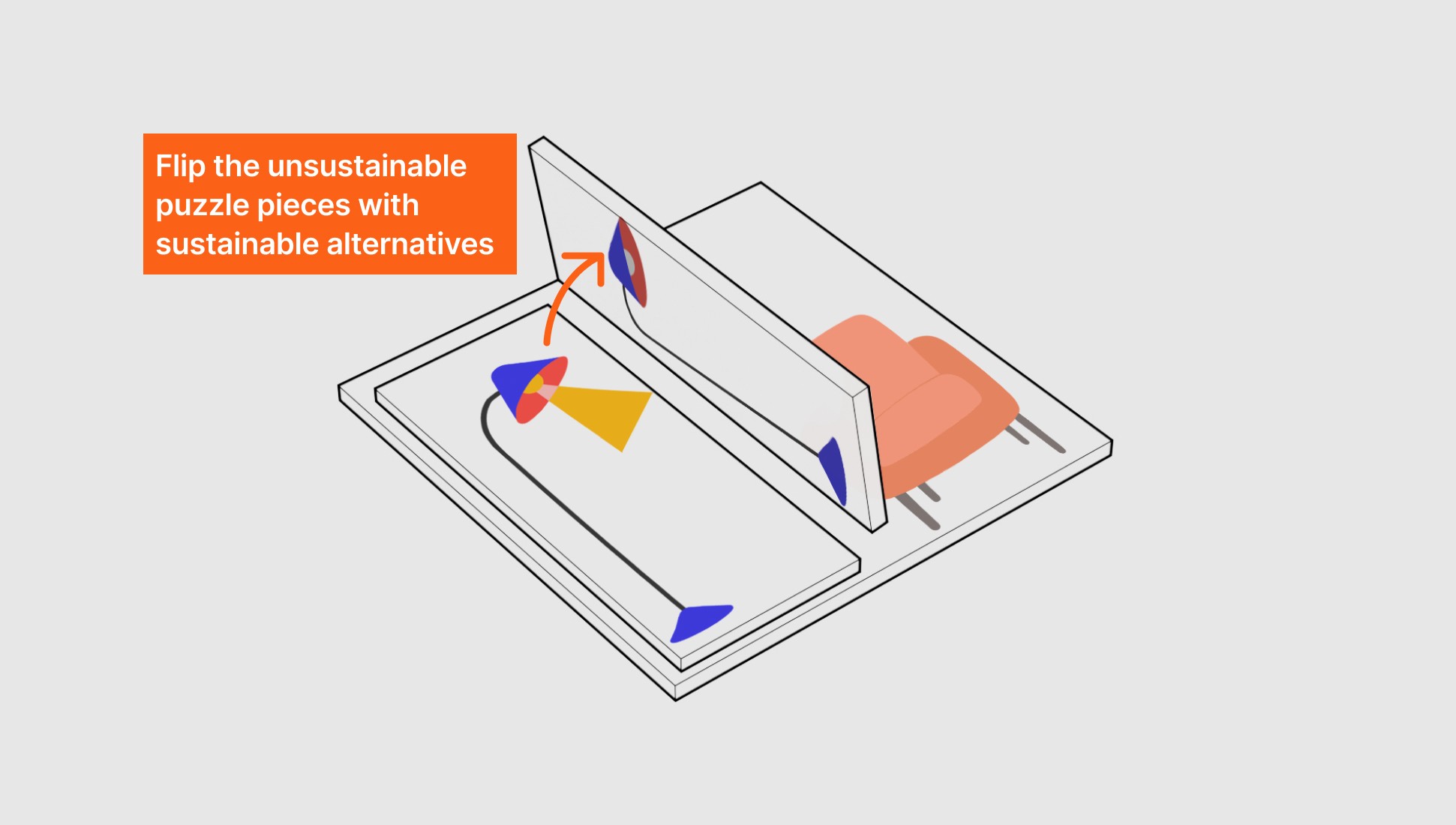
In the puzzle's first interactive challenge, players explore a household simulation where they identify areas for reducing consumption by interacting with standby devices, unnecessary lights, and water-wasting taps.

A.

B.

C.

  • C — Flipping puzzle design chosen for its "before-and-after" learning. Reversible pieces let children transform unsustainable choices into sustainable ones. As they flip pieces, they create a complete sustainable scene that reinforces systems thinking.

  • A Swappable pieces require pre-stored alternative pieces that complicate the initial experience.

  • B — Binary on/off interaction oversimplifies sustainability choices, missing the opportunity to show multiple alternatives and their relative impacts.

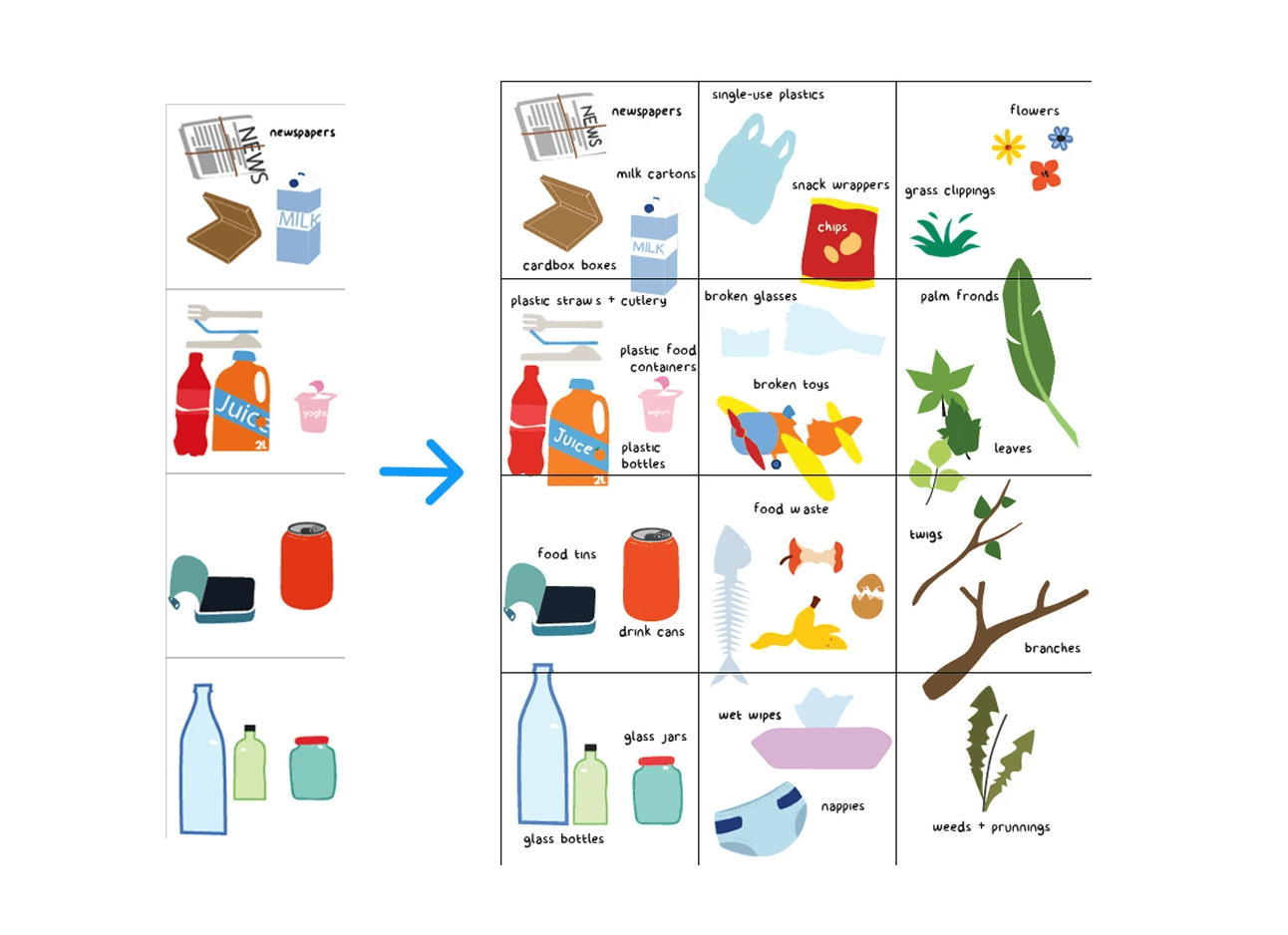
Activity 2: Waste Sorting

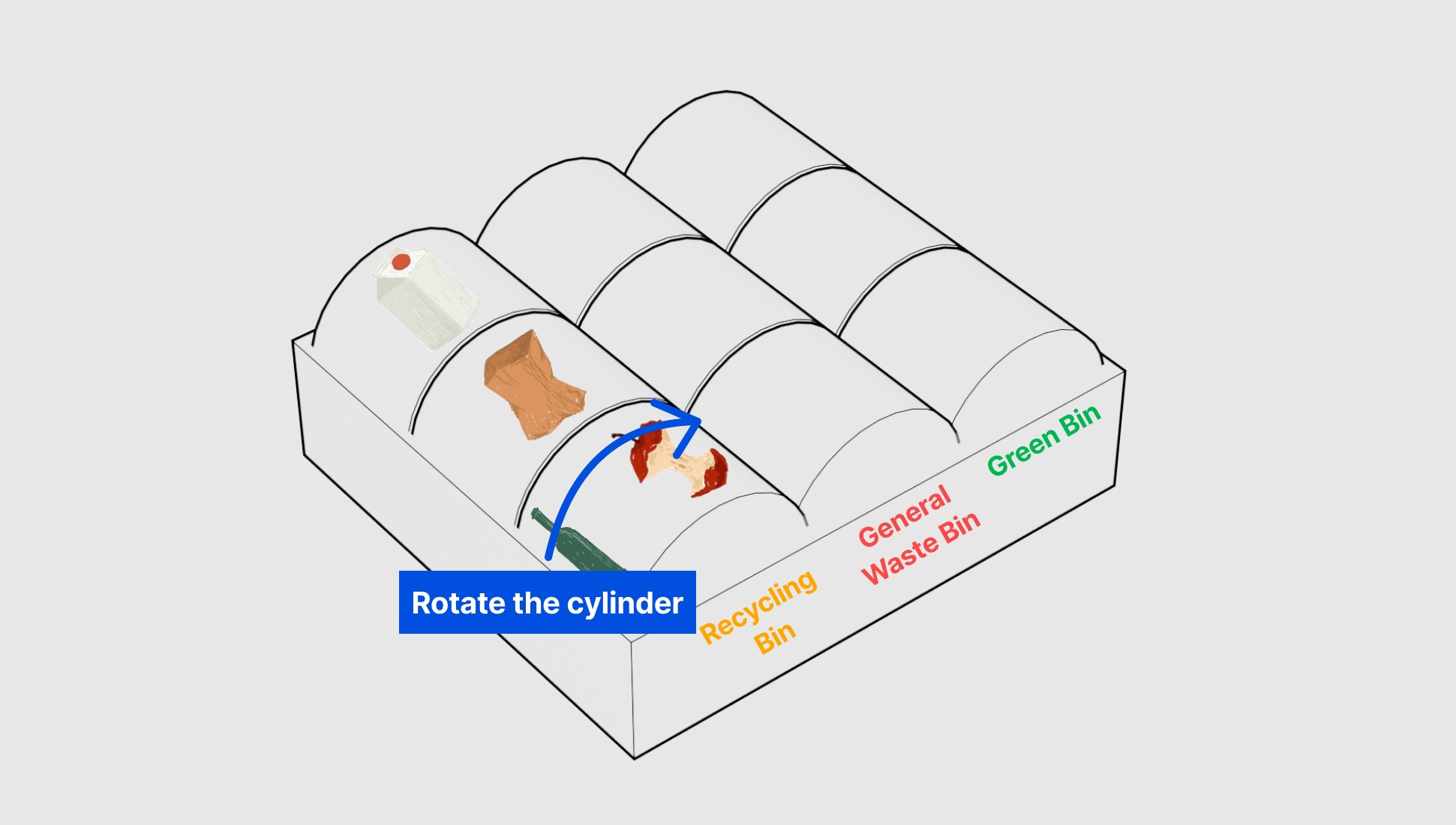
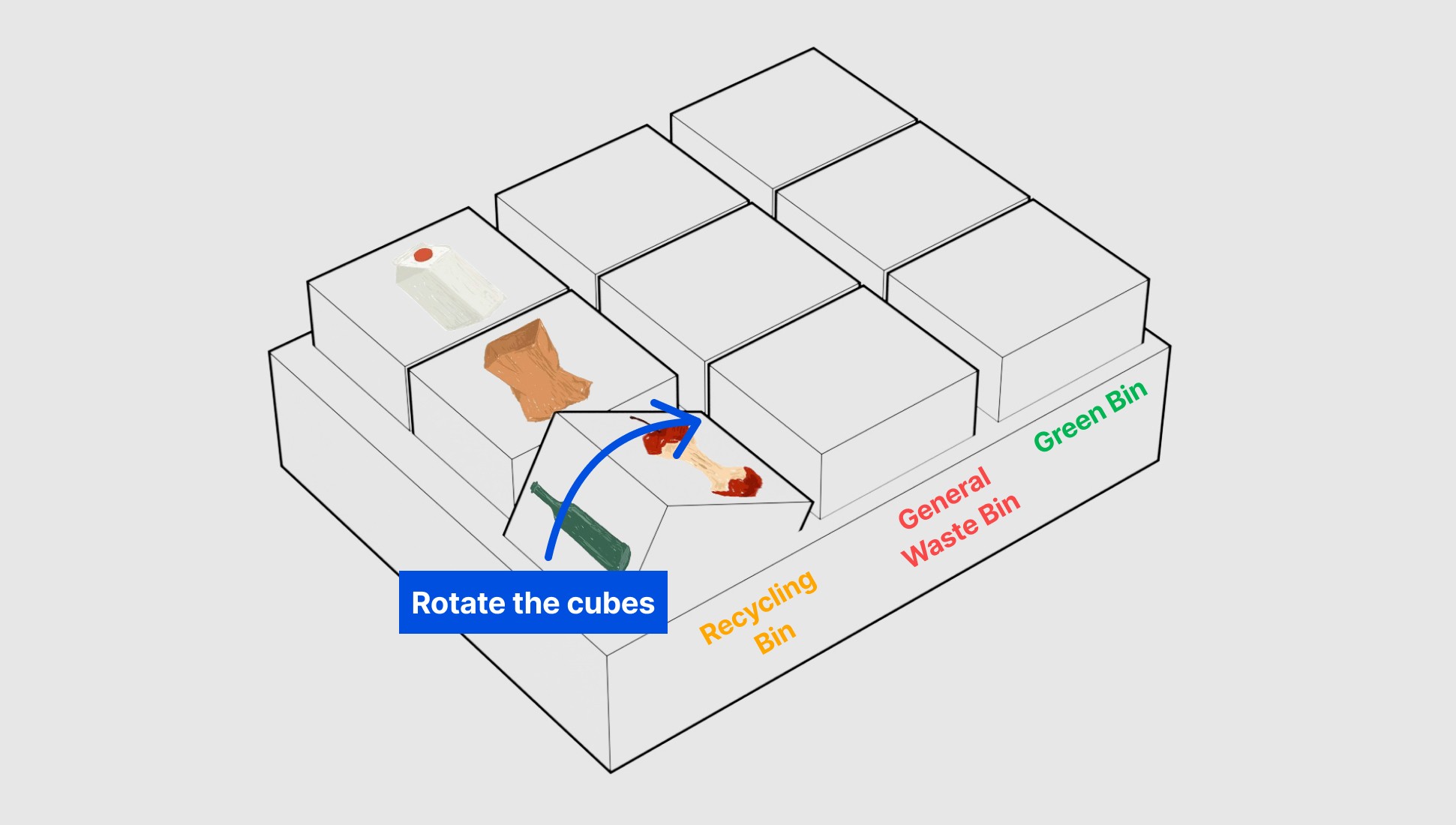
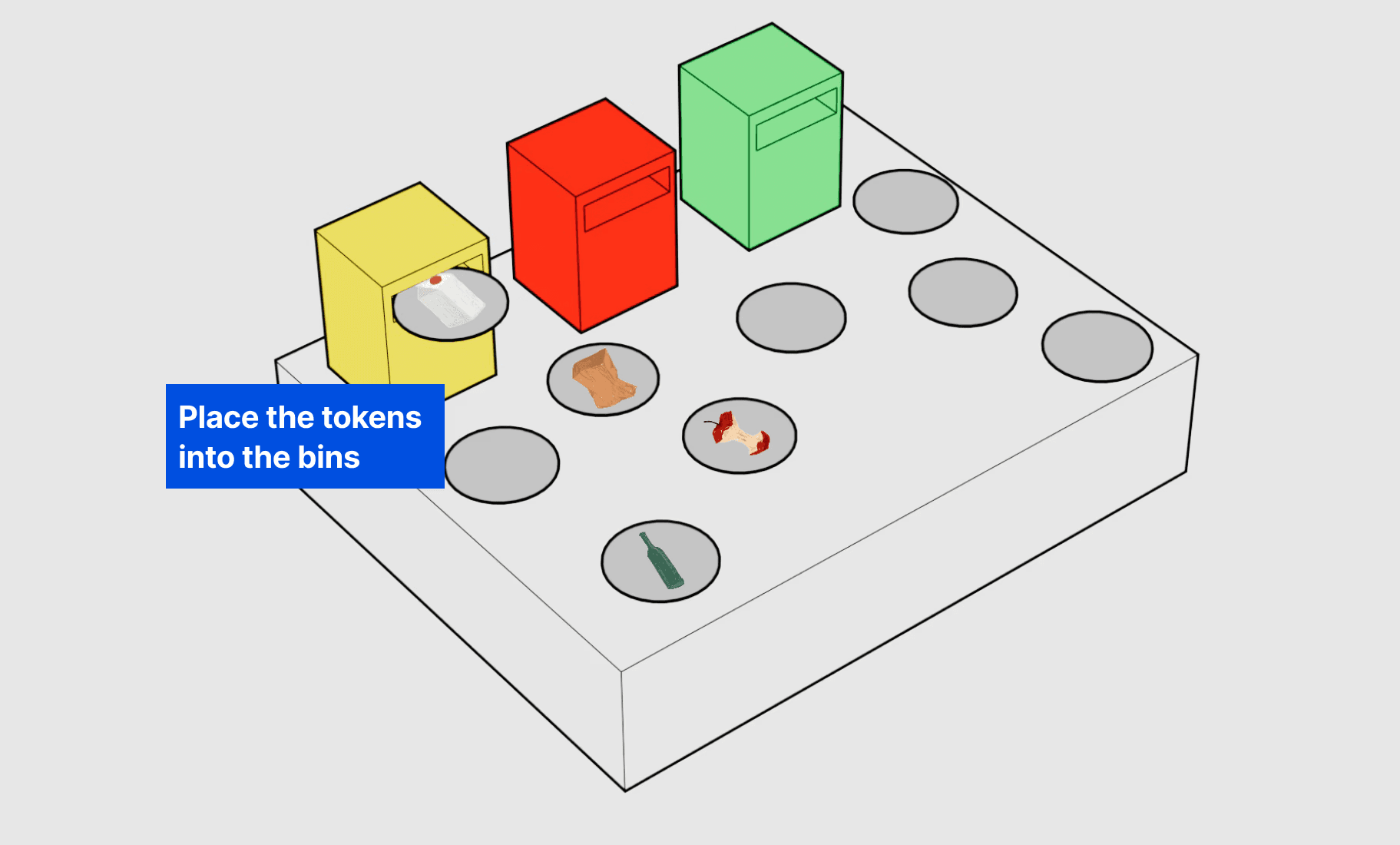
In the puzzle's second interactive challenge, players sort waste items into appropriate recycling and disposal bins

B — The rotating cubes design was selected for its physical interaction advantages. The angular geometry provides tactile reference points that help children understand their actions, while natural detents at 90-degree positions create satisfying mechanical stops that confirm each decision. The flat faces provide distinct "landing zones" that children can easily feel when completing the rotation.

A.

B.

C.

Activity 3: Forest Layers

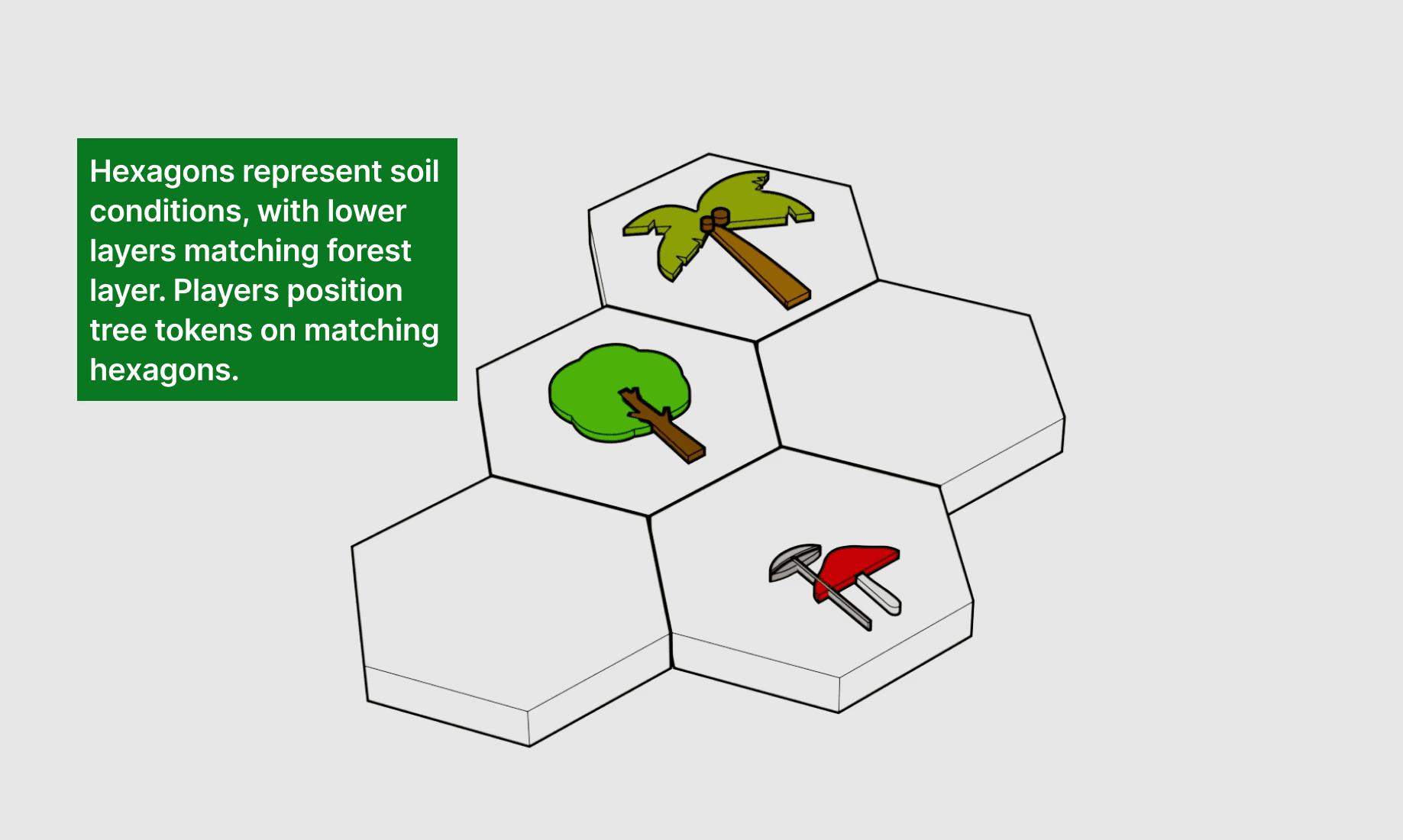
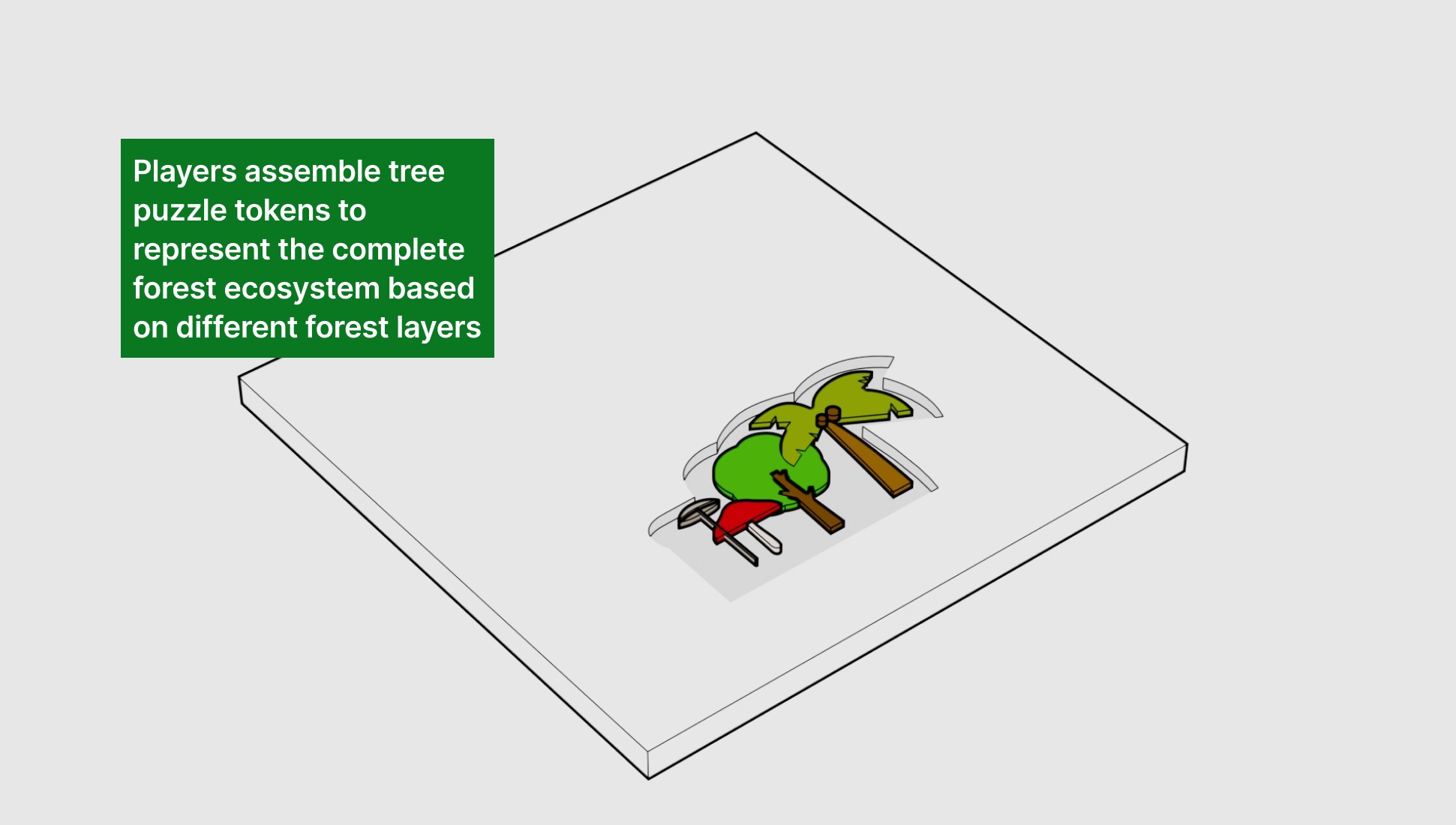
In the puzzle's fourth interactive challenge, players select strategic locations for different tree species to establish wildlife habitats, considering various environmental factors.

B — The assembled tree puzzle was selected as the assembled pieces naturally create height layers that are immediately visible, allowing players to see the entire forest ecosystem structure at once. Each piece can be explored independently to build toward a complete ecosystem narrative.

A.

B.

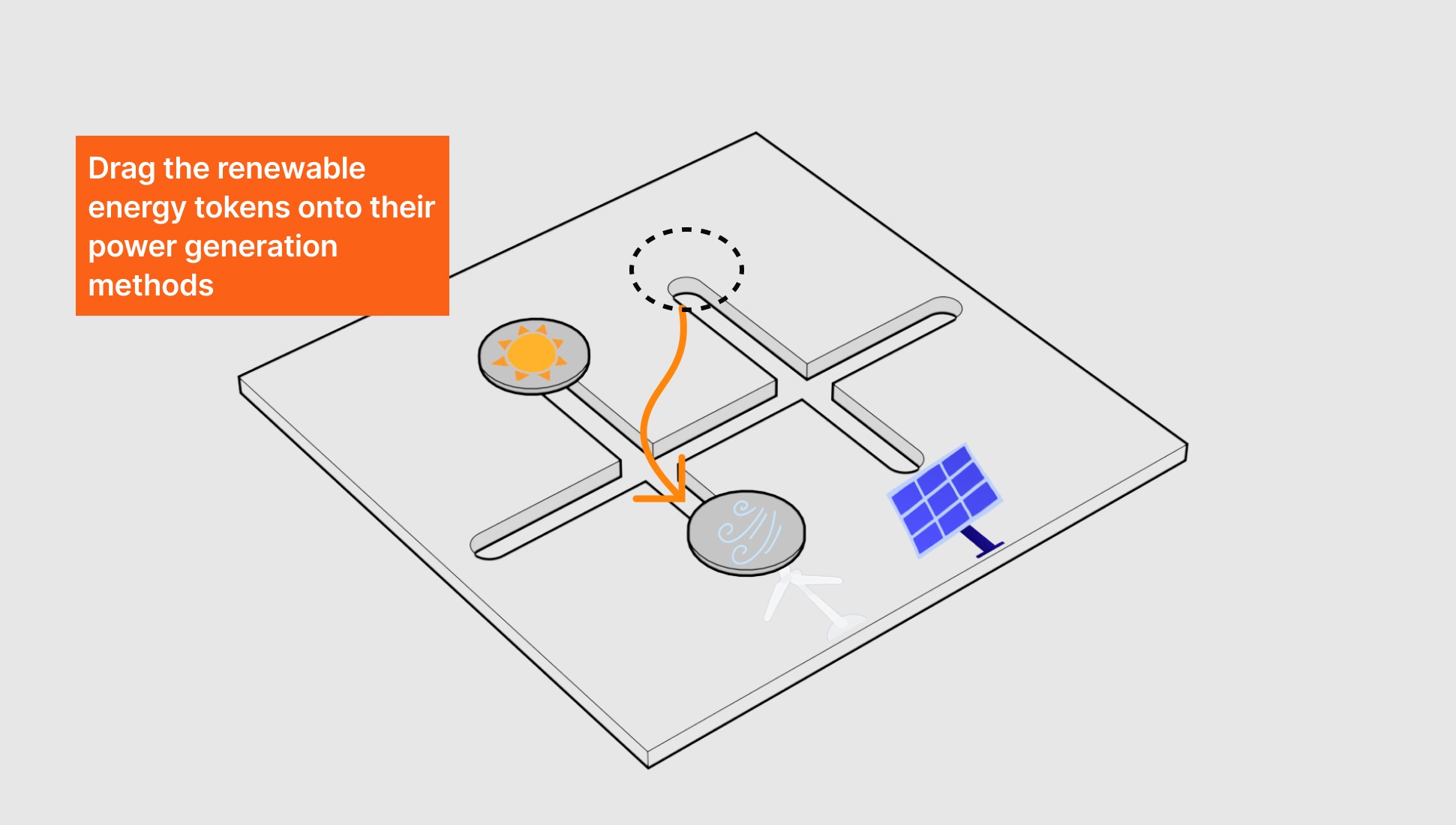
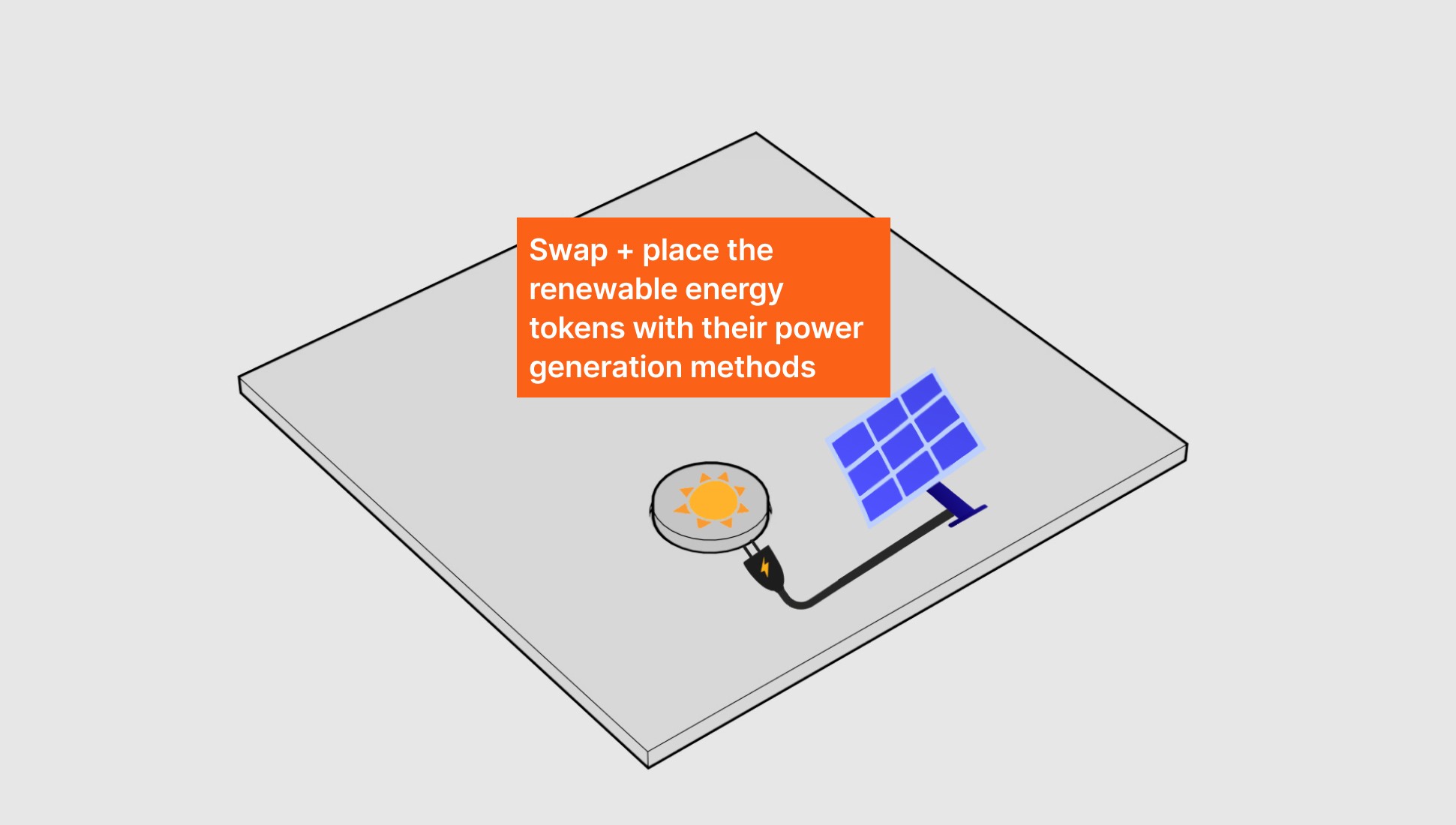
Activity 5: Renewable Energy

In the puzzle's fifth interactive challenge, players learn about different renewable energy sources and match each type to its corresponding power generation method.

B — the swap + place design maintains consistency with your project's fundamental concept of "assembling the correct image”, whereas the drag-only design (A.) reduces interaction to simple matching without the assembly satisfaction.

A.

B.

Activity 1: Energy & Water Conservation

In the puzzle's first interactive challenge, players explore a household simulation where they identify areas for reducing consumption by interacting with standby devices, unnecessary lights, and water-wasting taps.

A.

B.

C.

  • C — Flipping puzzle design chosen for its "before-and-after" learning. Reversible pieces let children transform unsustainable choices into sustainable ones. As they flip pieces, they create a complete sustainable scene that reinforces systems thinking.

  • A Swappable pieces require pre-stored alternative pieces that complicate the initial experience.

  • B — Binary on/off interaction oversimplifies sustainability choices, missing the opportunity to show multiple alternatives and their relative impacts.

Activity 2: Waste Sorting

In the puzzle's second interactive challenge, players sort waste items into appropriate recycling and disposal bins

A.

B.

C.

B — The rotating cubes design was selected for its physical interaction advantages. The angular geometry provides tactile reference points that help children understand their actions, while natural detents at 90-degree positions create satisfying mechanical stops that confirm each decision. The flat faces provide distinct "landing zones" that children can easily feel when completing the rotation.

C.

Activity 3: Forest Layers

In the puzzle's fourth interactive challenge, players select strategic locations for different tree species to establish wildlife habitats, considering various environmental factors.

A.

B.

B — The assembled tree puzzle was selected as the assembled pieces naturally create height layers that are immediately visible, allowing players to see the entire forest ecosystem structure at once. Each piece can be explored independently to build toward a complete ecosystem narrative.

B.

Activity 5: Renewable Energy

In the puzzle's fifth interactive challenge, players learn about different renewable energy sources and match each type to its corresponding power generation method.

A.

B.

B — the swap + place design maintains consistency with your project's fundamental concept of "assembling the correct image”, whereas the drag-only design (A.) reduces interaction to simple matching without the assembly satisfaction.

B.

Prototype

System Architecture

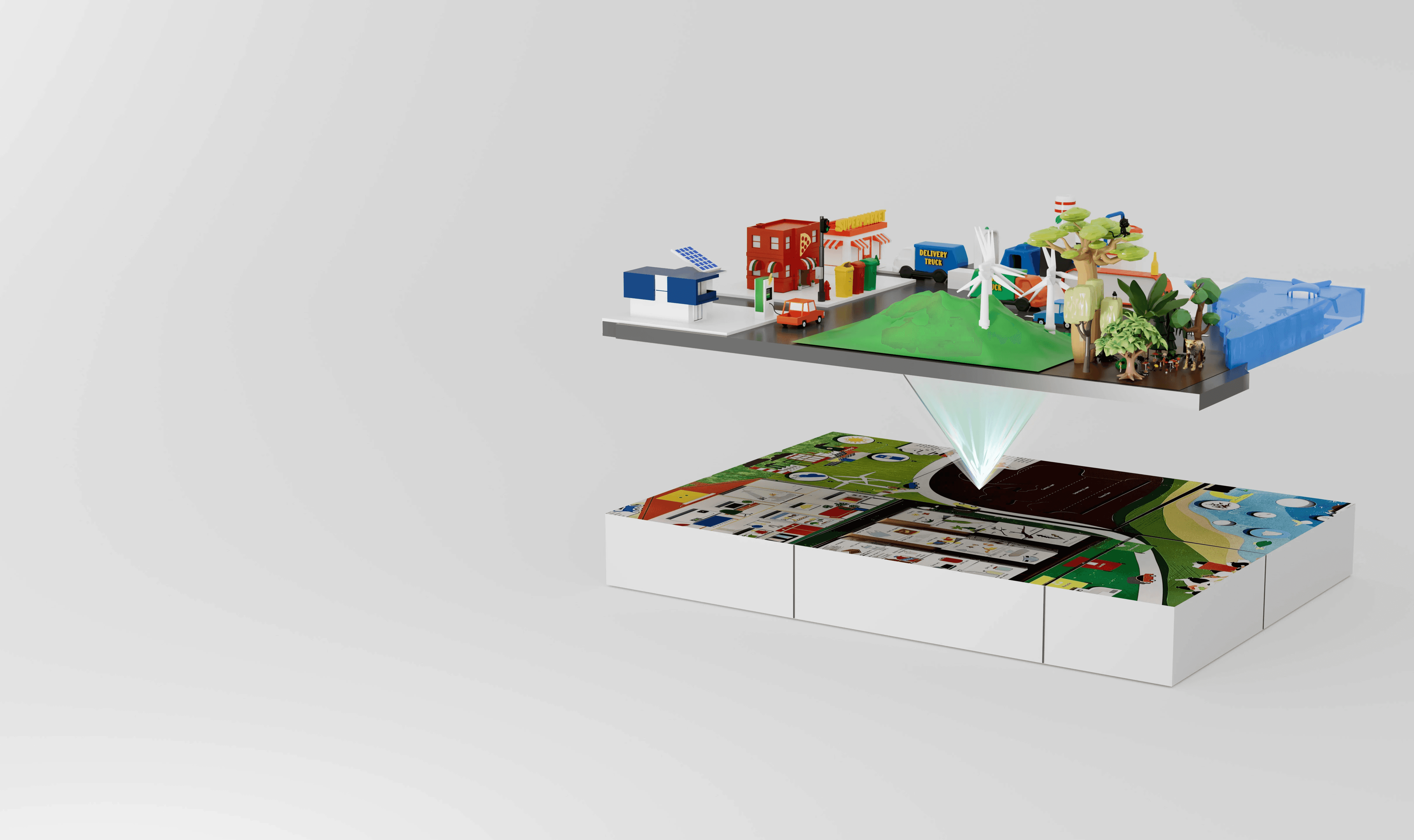
The poster (594mm × 841mm) features five puzzle modules in numbered zones, each representing a sustainability challenge. Accompanying booklets provide knowledge and mission guides. Click each zone to explore design details and interaction mechanics.
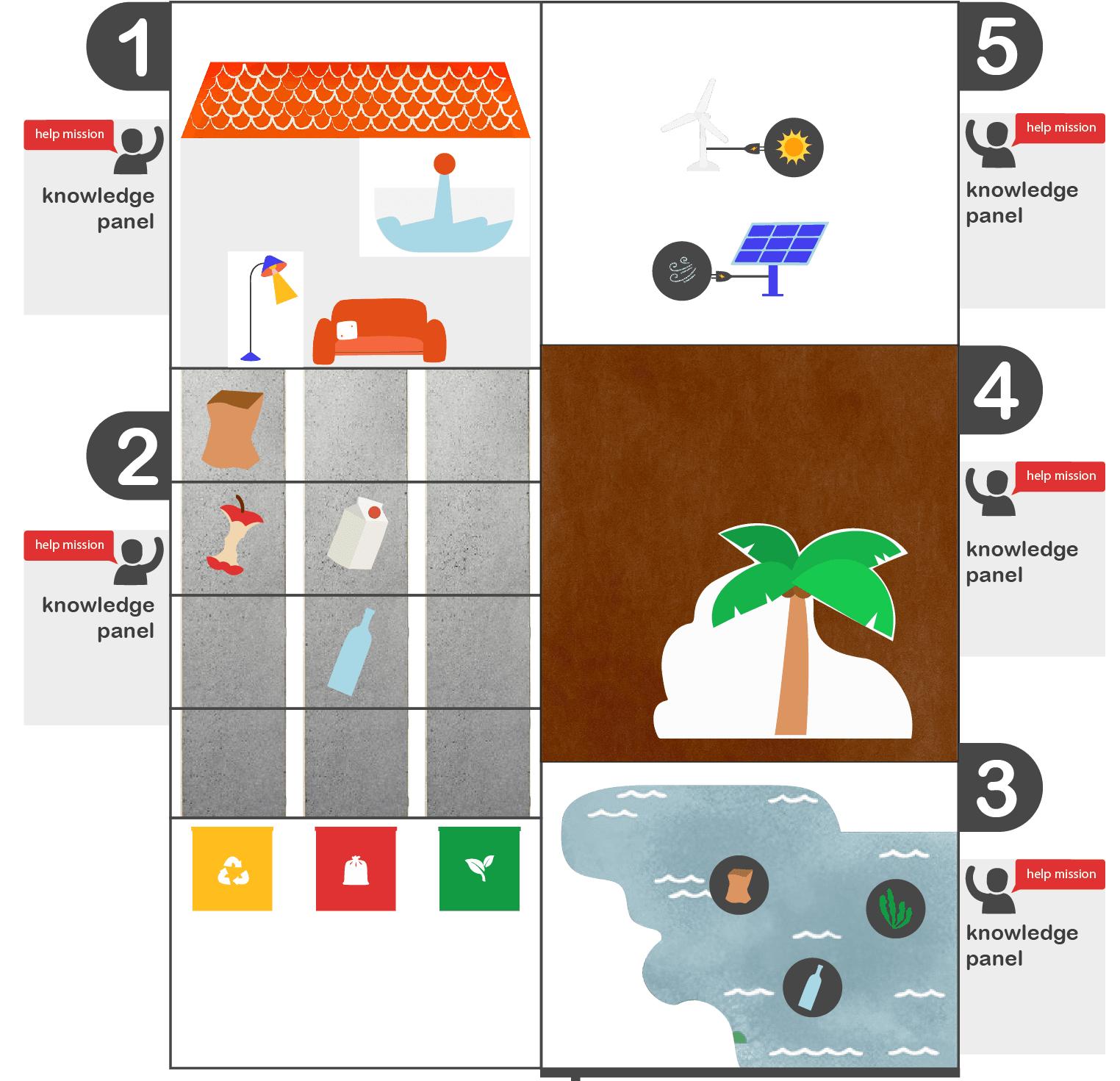
Energy & Water Conservation

Players identify overconsumption areas and flip puzzle pieces to reveal sustainable alternatives.

Waste Stream

Players identify overconsumption areas and flip puzzle pieces to reveal sustainable alternatives.

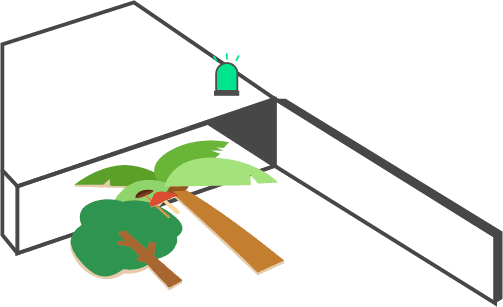
Ocean Rescue

Players remove pollution tokens from the ocean. A green LED indicates success and unlocks a compartment with forest clues.

Reforestation

Players assemble plant variety pieces according to forest stratification—from forest floor to canopy, building a complete ecosystem.

Power Grid

Players re-match renewable energy source tokens with their correct power generation methods and applications.

Energy & Water Conservation

Players identify overconsumption areas and flip puzzle pieces to reveal sustainable alternatives.

Waste Stream

Players identify overconsumption areas and flip puzzle pieces to reveal sustainable alternatives.

Ocean Rescue

Players remove pollution tokens from the ocean. A green LED indicates success and unlocks a compartment with forest clues.

Reforestation

Players assemble plant variety pieces according to forest stratification—from forest floor to canopy, building a complete ecosystem.

Power Grid

Players re-match renewable energy source tokens with their correct power generation methods and applications.

Energy & Water Conservation

Players identify overconsumption areas and flip puzzle pieces to reveal sustainable alternatives.

Waste Stream

Players identify overconsumption areas and flip puzzle pieces to reveal sustainable alternatives.

Ocean Rescue

Players remove pollution tokens from the ocean. A green LED indicates success and unlocks a compartment with forest clues.

Reforestation

Players assemble plant variety pieces according to forest stratification—from forest floor to canopy, building a complete ecosystem.

Power Grid

Players re-match renewable energy source tokens with their correct power generation methods and applications.

Energy & Water Conservation

Players identify overconsumption areas and flip puzzle pieces to reveal sustainable alternatives.

Waste Stream

Players identify overconsumption areas and flip puzzle pieces to reveal sustainable alternatives.

Ocean Rescue

Players remove pollution tokens from the ocean. A green LED indicates success and unlocks a compartment with forest clues.

Reforestation

Players assemble plant variety pieces according to forest stratification—from forest floor to canopy, building a complete ecosystem.

Power Grid

Players re-match renewable energy source tokens with their correct power generation methods and applications.

Energy & Water Conservation

Players identify overconsumption areas and flip puzzle pieces to reveal sustainable alternatives.

Waste Stream

Players identify overconsumption areas and flip puzzle pieces to reveal sustainable alternatives.

Ocean Rescue

Players remove pollution tokens from the ocean. A green LED indicates success and unlocks a compartment with forest clues.

Reforestation

Players assemble plant variety pieces according to forest stratification—from forest floor to canopy, building a complete ecosystem.

Power Grid

Players re-match renewable energy source tokens with their correct power generation methods and applications.

Prototype

Digital Prototyping for Physical Accuracy

For this large-scale poster with multiple interactive elements, I began with a 1:1 scale 3D model to validate dimensions and test interaction mechanics before physical prototyping. This digital-first approach allowed me to simulate user interactions, test ergonomics, verify mechanical functions at actual size, and minimize material waste.

I tested the rotation of the cubes, ensuring sufficient space between them to prevent jamming during rotation

I tested this door locking mechanism using a servo motor with U-shaped components to secure and release the door

Prototype

Playtesting & Iteration

During my prototyping phase, I conducted playtesting to observe how intuitively children interact with the tangible puzzle elements and engage with the AR experience. These sessions revealed several friction points.

Players struggled to verify if cube rotations were correct. I redesigned cube faces with a visual alignment system where correctly rotated pieces form complete pictures, providing immediate self-validation.

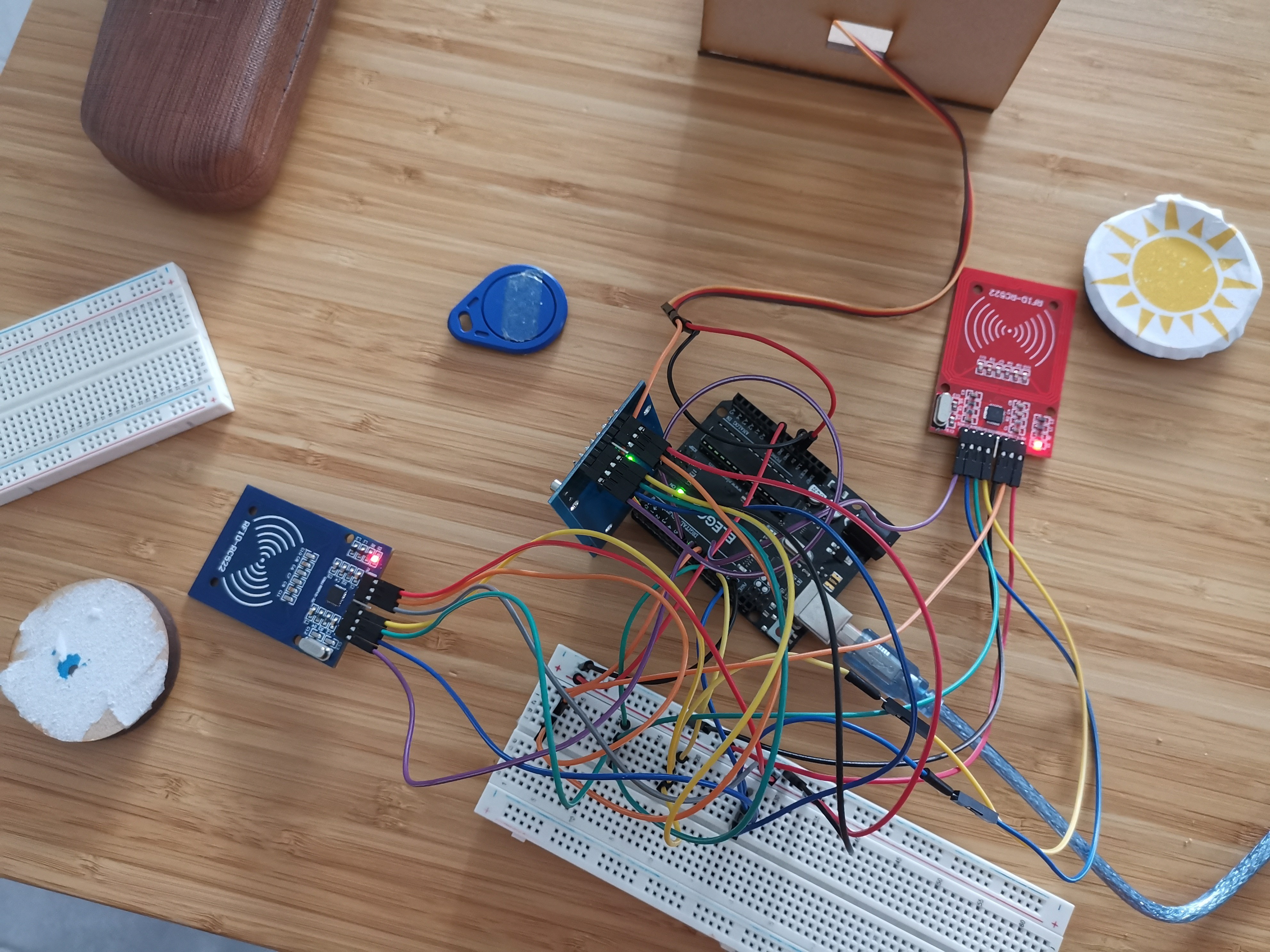
RFID readers intermittently failed to detect correctly placed energy tokens. After identifying voltage instability issues, I resolved the problem by re-soldering connections, switching libraries, and stabilizing power through capacitor integration to ensure reliable operation.

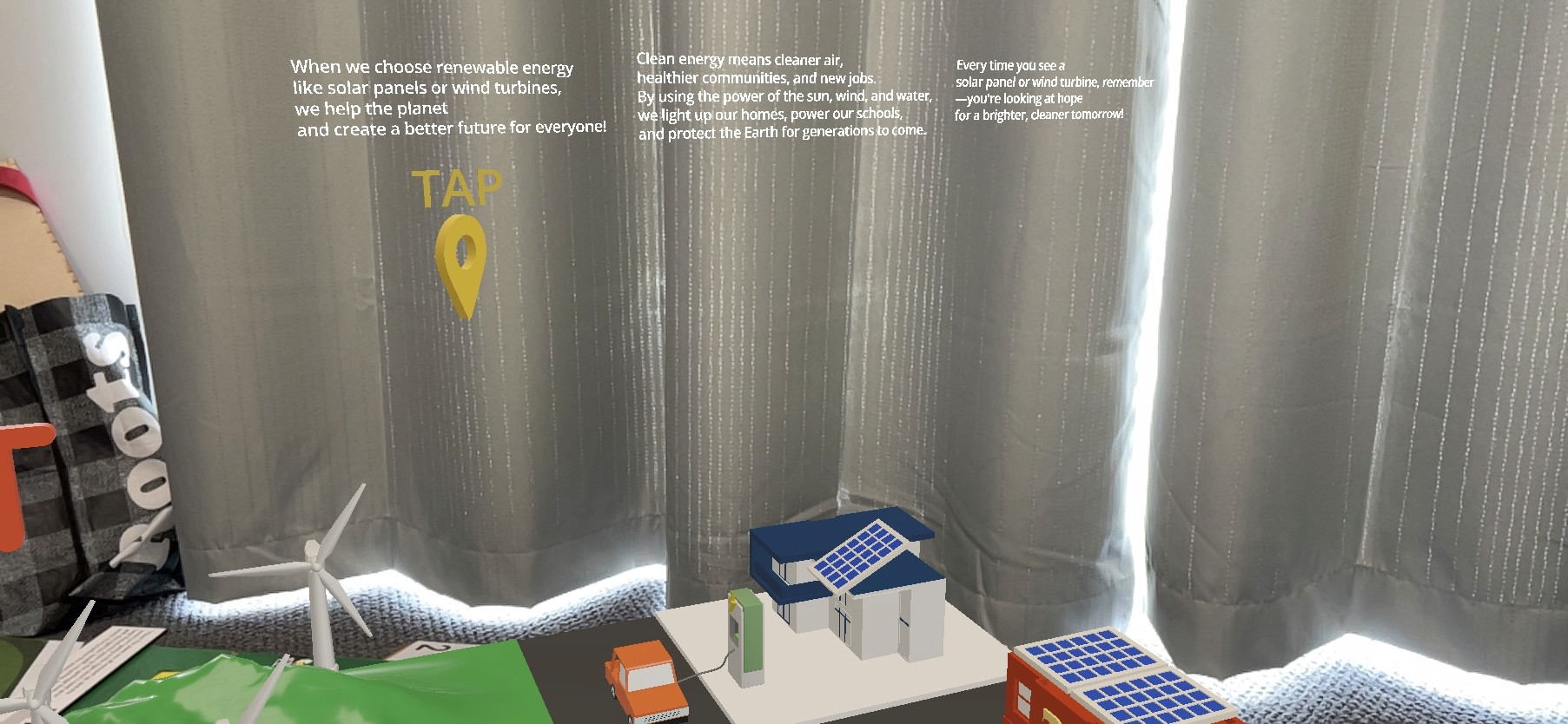
The voice-over format delivered knowledge too quickly without visual context. I redesigned it using readable text and motion graphics, allowing learners to process information at their own pace while engaging with the AR scene.
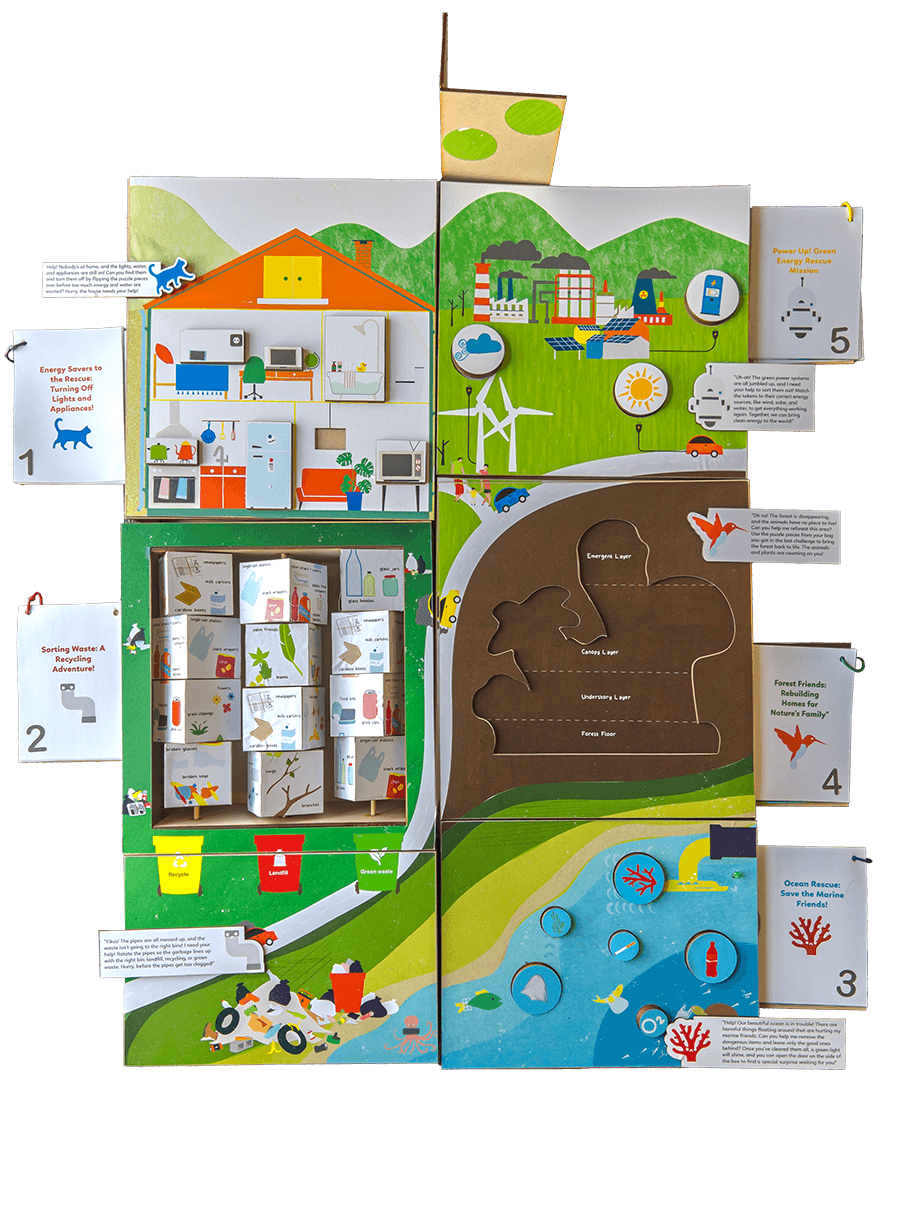
Deliver - The final MVP product

Mission Briefing

Mission Briefing

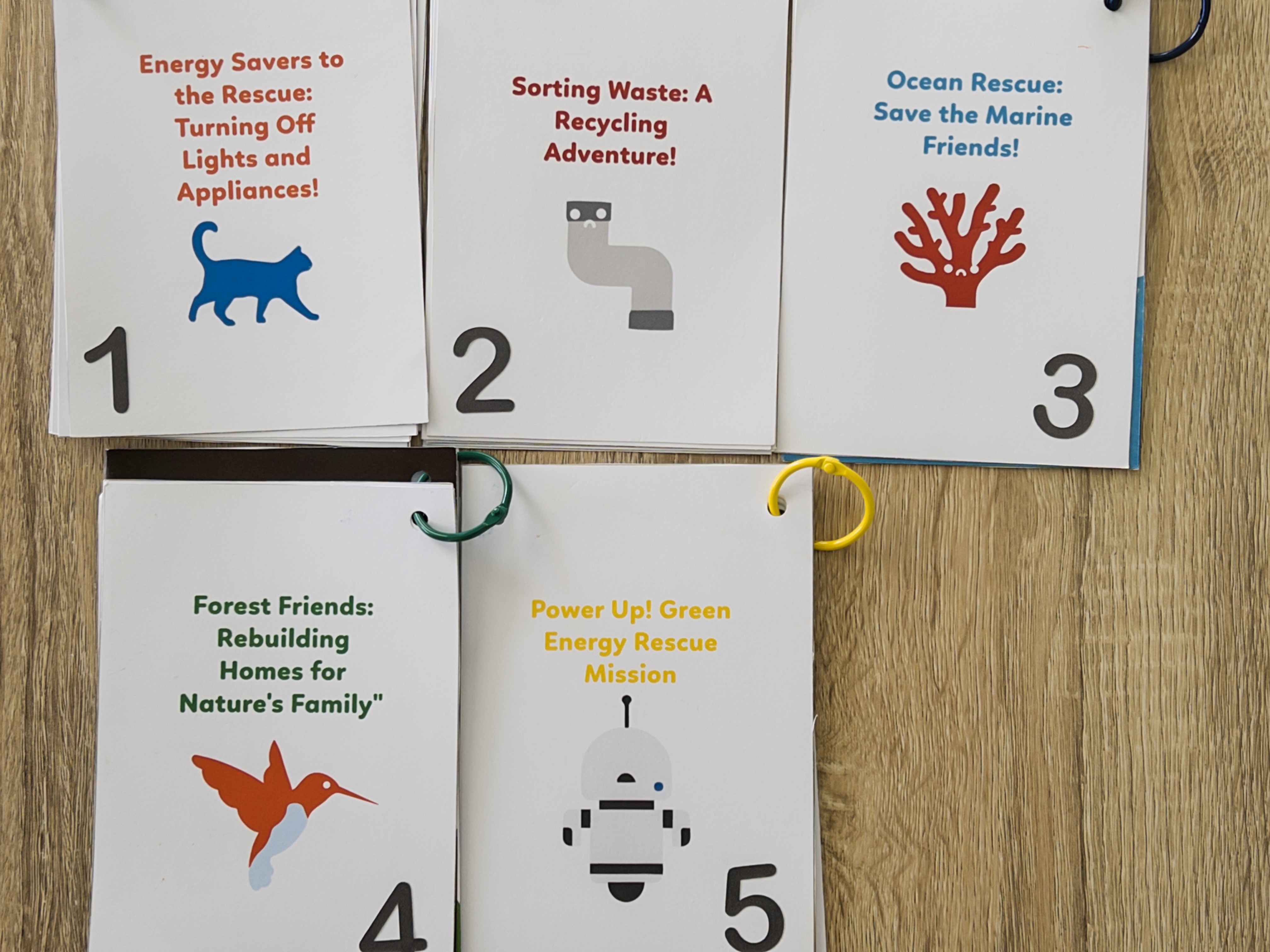
Learners follow the numbered sequence on the booklet cover for each themed activity, read educational content, and understand the activity mission.

Energy & Water Conservation

-> Click each zone to explore the hi-fi interaction mechanics

Energy & Water Conservation

-> Click each zone to explore the hi-fi interaction mechanics

AR Discovery — Environmental Impact Reveal

AR Discovery — Environmental Impact Reveal

Deliver - The final MVP product

Mission Briefing

Learners follow the numbered sequence on the booklet cover for each themed activity, read educational content, and understand the activity mission.

Energy & Water Conservation

-> Click each zone to explore the hi-fi interaction mechanics

AR Discovery — Environmental Impact Reveal

What I learned?

Assumptions vs. Actual Insights

Initial design concept came only from research and observations. Usability testing confirmed hypotheses like immediate feedback's value, but revealed unexpected friction. This reinforced that designing for children requires designing with them

Designing for Inclusion

I was initially drawn to visually striking designs with bold colours and varied typography—but the options felt overwhelming. I returned to fundamentals, studying accessibility-focused design guidelines and the reasoning behind each decision. This shifted my focus from aesthetics to inclusion.

If I had additional time, I would…

Market Viability

I would research the market viability of a collapsible or modular version. Hypothesizing that portability is key for classroom adoption, I’d refine the physical form factor to be more compact.

Expand AR interactivity

Currently, learners passively view the AR scene. I would add two-way interactions—allowing children to manipulate virtual elements, transforming passive observation into active engagement and strengthening memory retention.
PROJECT

Self-directed project

TOOL

Figma, Adobe Aero, Adobe CC Suite

CONTRIBUTIONS

Product Thinking

Game Design

Prototype

Coding

Electronics

Green Journey Adventure

Thanks for stopping by. Curious or have feedback? Let’s chat!

Email: ninaphung9912@gmail.com

LinkedIn

Nina Phung - © 2025

Made with love❤︎⁠, fueled by matcha lattes.

Thanks for stopping by. Curious or have feedback? Let’s chat!

Email: ninaphung9912@gmail.com

LinkedIn

Nina Phung - © 2025

Made with love❤︎⁠, fueled by matcha lattes.

Create a free website with Framer, the website builder loved by startups, designers and agencies.